
Salon Hair Products vs. Drugstore Hair Products: Is the Difference Really Worth It?

Hair care advice is everywhere. One minute a stylist is recommending a new treatment, the next an influencer is declaring a $10 shampoo the “best ever,” and somehow everyone on the internet has become a hair expert.
So how are you supposed to know what is actually worth buying?
One question comes up again and again: Is a drugstore hair product really that different from a salon-quality product? And if it is, will you actually see the difference in your hair?
The honest answer is: It depends on your hair.
The goal is to understand where investing in your hair care can make a meaningful difference in performance, results and value.
Two shampoos can both promise hydration. Two conditioners can both promise smoother hair. Two styling products can both claim to fight frizz. But the ingredients, formulation, concentration, technology and intended use can be very different—and those differences can affect how a product performs over time.

It's Not Just About What's in the Bottle
One of the biggest misconceptions about professional hair care is that salon products simply contain "better ingredients."
It's more complicated than that.
Both professional and mass-market products have to meet safety and regulatory requirements, and drugstore products can contain effective ingredients. The difference often comes down to how those ingredients are formulated, combined and targeted to a specific hair concern.
Professional brands tend to develop products around particular needs—such as chemically treated hair, heat damage, color preservation, moisture balance, scalp care, curl definition or fine-hair volume.
That specificity matters.
Your hair isn't generic, so your hair care shouldn't have to be either.
Ingredients & Formulation: What Are You Actually Paying For?
Professional products are often built around more targeted formulations and combinations of conditioning agents, proteins, amino acids, oils, polymers and other performance ingredients.
Rather than simply making hair feel soft immediately, a well-formulated professional product may be designed to address how the hair behaves during washing, conditioning, styling and repeated exposure to heat, color services and environmental stress.
That doesn't mean every expensive product is automatically better—or that every affordable product is ineffective.
It means formulation matters more than the price tag alone.
For example, if your hair is fine and easily weighed down, a rich moisturizing formula may not be your best choice, even if it is expensive. If your hair is highly processed and dry, a basic conditioner that gives you temporary slip may not provide the level of conditioning or protection you're looking for.
This is where professional guidance is valuable: the right product for your hair matters most.
Performance: Instant Results vs. Consistent Results
This is where the difference can become easier to notice.
Some products are designed primarily to create an immediate cosmetic effect. Your hair may feel silky, look shiny and be easier to comb after one wash.
That's not necessarily a bad thing. In fact, that's part of what a good hair product should do.
But the bigger question is: What happens after repeated use?
Professional hair care is often formulated with longer-term performance in mind—helping improve manageability, maintain moisture, protect against styling stress or support the appearance and feel of chemically treated hair.
Think of it this way:
Immediate results = How does my hair look and feel today?
Long-term performance = How does my hair continue to look, feel and behave after using this product consistently?
The second question is where product selection gets more interesting.
Your Drugstore Hair Product Label Deserves a Closer Look
When you’ve invested in professional color, the products you use at home matter. The real difference is often in the formulation and whether it’s designed to support your hair’s specific needs. Dermatologists note that the way you wash and condition your hair can significantly affect its health and appearance, particularly when hair has already been chemically treated.
A few ingredients are worth knowing before you buy:
Sulfates: Cleansing agents such as sodium lauryl sulfate (SLS) create that satisfying lather and are considered safe for typical rinse-off use. However, stronger cleansing formulas can be less comfortable for some hair and scalp types and may leave already-dry or processed hair feeling stripped.
Silicones: Ingredients such as dimethicone can act as conditioning and film-forming agents that help hair feel smoother and more manageable. The question is whether the formula—and your routine—provides the right balance for your hair rather than simply masking dryness with temporary slip and shine.
pH matters, too: Hair and scalp products are formulated across a range of pH levels, and the overall formulation can influence how hair feels, behaves and responds to chemical services. That’s one reason your stylist may recommend a professional formula specifically selected for color-treated, dry, fine, coarse or chemically processed hair.
Takeaway: Don't shop by the front of the bottle— Look at the whole formula, consider what your hair actually needs, and ask your stylist what will help preserve your color, condition and style between appointments. At Forbici, product recommendations aren't one-size-fits-all; they're part of creating a hair-care routine that works for your hair.
Price vs. Value: They're Not the Same Thing
A $10 shampoo is cheaper than a $50 shampoo. That's simple math.
But price per bottle isn't necessarily the same as value.
Consider how much product you use, how often you wash your hair, whether the product addresses your actual hair concern, how your hair behaves between washes and whether you need additional products to compensate for something the original formula isn't providing.
A product that costs more but requires less product per use and delivers the result you're looking for may provide a different value equation than its shelf price suggests.
That's why at Forbici, we believe the best question is:
"What does my hair actually need?"
Why Goldie Locks Is a Forbici Favorite
Goldie Locks has developed a following among stylists and clients because its approach is different from the traditional "more protein equals stronger hair" philosophy.

The brand focuses heavily on hydration and amino-acid-based formulations, rather than relying on traditional direct protein additives. Goldie Locks says its products are designed to support softer, more resilient hair without leaving it feeling overly stiff or heavy. Its current Signature line includes shampoo, conditioner, hair mask, leave-in conditioner and serum, along with styling and scalp-focused products.
That makes Goldie Locks particularly interesting for people who want hydration, softness, manageability and movement without a heavy feeling.
It's also a good example of why professional product selection isn't simply about choosing a "luxury" brand. It's about finding a formulation that makes sense for the condition and behavior of your hair.
Goldie Locks may be worth exploring if your priorities include:
Hydration without excessive heaviness
Softer, more manageable hair
Hair that feels dry or lacks flexibility
Heat-styled hair that needs additional care
Clients who prefer a hydration-focused approach
Scalp and hair routines that emphasize balance
Goldie Locks also emphasizes clinically tested results, including claims around reduced breakage and improved smoothness and manageability. Those are brand-reported results, so individual experiences will naturally vary.
Why Oribe Remains a Standout
Oribe takes a different approach, combining highly engineered formulas with a strong emphasis on luxury hair care and styling performance.
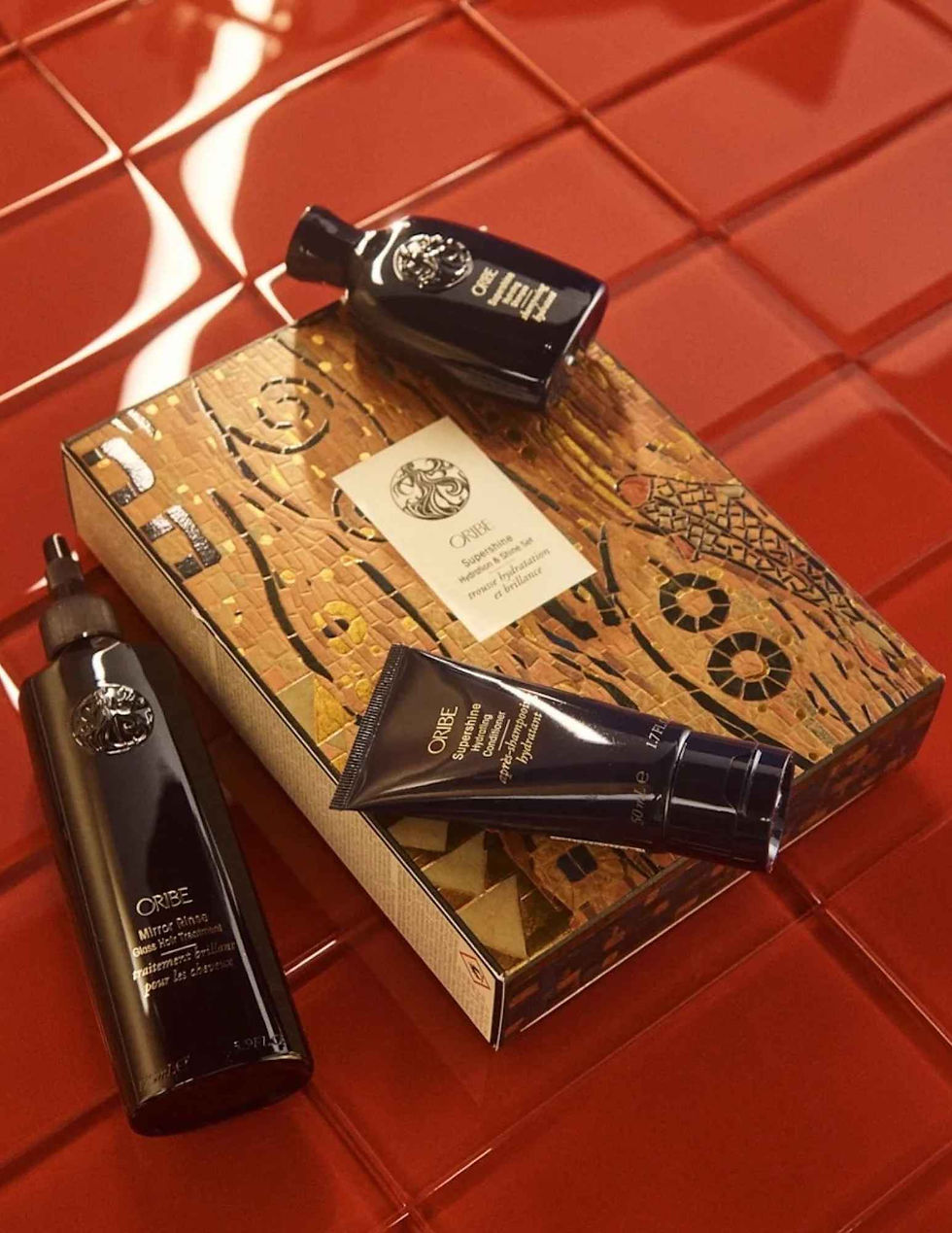
Its Gold Lust collection, for example, is specifically designed around repairing and restoring dry, damaged hair. The collection uses what Oribe calls its Bio-Restorative Complex, featuring plant collagen, caffeine, biotin and niacinamide. Oribe positions the collection for hair affected by processing, heat styling and brushing.
Oribe also publishes its ingredient lists, allowing consumers to see exactly what is included in individual formulas rather than relying solely on marketing language.
For someone whose hair has been colored, highlighted, heat styled or otherwise stressed, that targeted approach can be especially appealing.
Gold Lust is also one of Oribe's established best-selling collections, alongside products such as Royal Blowout, Dry Texturizing Spray and Hair Alchemy.
Oribe may be worth considering if your priorities include:
Repair and restoration for dry or damaged hair
Protecting hair from repeated heat styling
Smoother, shinier, more polished results
Color- or chemically-treated hair
High-performance styling and finishing
A luxury hair-care experience
So...Are Salon Products Actually Better?
Here's the answer that doesn't fit neatly into a TikTok sound bite:
Not every salon product is better than every drugstore product.
And not every drugstore product is bad for your hair.
The difference is often found in formulation, specificity, performance and how well the product matches your individual hair needs.
A drugstore shampoo may be perfectly appropriate for someone with healthy, untreated hair who simply wants basic cleansing and conditioning.
Someone with highlighted, color-treated, heat-styled, dry, coarse, fine or otherwise compromised hair may benefit from a more targeted professional formula.
That's why your stylist can be one of your best resources. They see your hair in person. They know what services you're receiving, how your hair responds to color and heat, and what you're trying to achieve between appointments.
Where Should You Spend Your Hair-Care Budget?
Spend strategically.
If you're going to invest in professional hair care, prioritize the products that solve your biggest problem.
For one person, that might mean a shampoo and conditioner designed for damaged hair. For another, it might be a heat protectant because they regularly use hot tools. Someone with fine hair may get more value from a lightweight styling product that creates volume without buildup.
And sometimes the best investment isn't another product at all—it's getting an expert recommendation for what your hair actually needs.
The Bottom Line
Your hair doesn't read the price tag.
It responds to the formulation.
The right product should make your hair easier to manage, help you achieve the results you want and work with your hair—not against it.
So before you buy the product that's trending on your feed, ask a better question:
What does my hair need—and which formula is actually designed to deliver it?
That's where professional hair care can earn its place in your routine.
October is the perfect time to rethink your hair-care routine—not because you need to chase every new product, but because you have something better: time to find what actually works for you. As the seasons shift and your hair’s needs can change, experimenting with the right shampoo, conditioner, treatment or styling products now gives you several weeks to see how your hair responds and fine-tune your routine. Dermatologists recommend choosing products based on your hair type and needs and paying attention to how your hair and scalp respond. By the time holiday parties and celebrations arrive, you won’t be guessing which products to reach for—you’ll have your go-to hair-care system dialed in, so your hair is ready for every photo, gathering and festive night on the calendar. Consider it your October hair-care homework: experiment now, perfect your routine, and let your holiday hair shine.
Want help figuring out where to spend—and where you can save? Ask your Forbici stylist. We'll help you build a hair-care routine around your actual hair, not the latest internet trend.


Comments